 Wavelens
Hears what's watching you.
Wavelens listens to the radio signals around your car and tells you when one of them is a plate reader, a body cam, a tracker, a drone — or a phone that keeps turning up behind you.
Android 8.0 and up. No account, no ads, no network permission — nothing ever leaves your phone.
What it finds
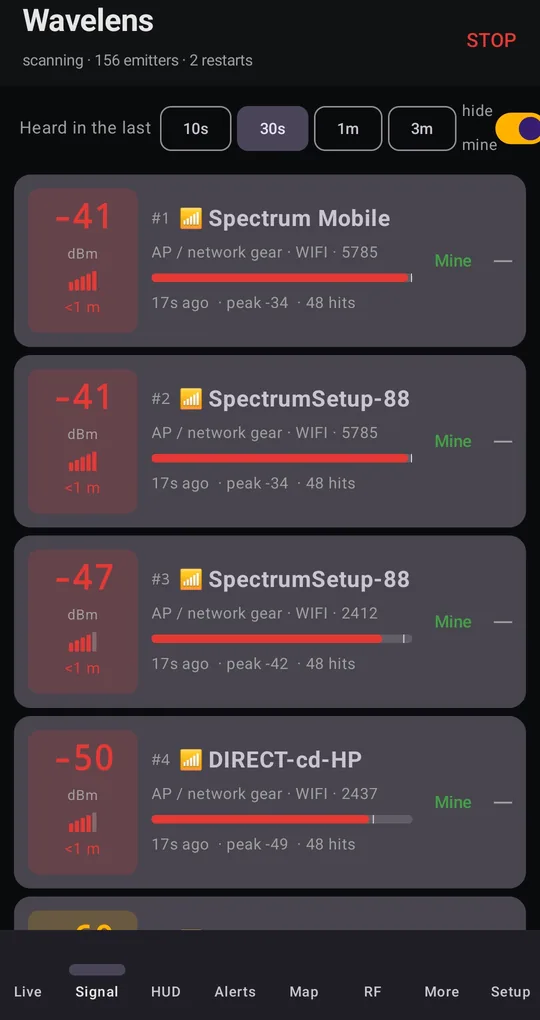
Every Bluetooth, Wi-Fi and cellular emitter in range is matched against a built-in signature list of 160-plus rules — vendor prefixes, service identifiers, advertising formats — and sorted by how much you probably care.
| Kind | Examples | How it's recognised |
|---|---|---|
| 📷Plate readers | Fixed ALPR poles, trailer-mounted and vehicle-mounted units | Wi-Fi hotspot and Bluetooth vendor prefixes used by the hardware makers |
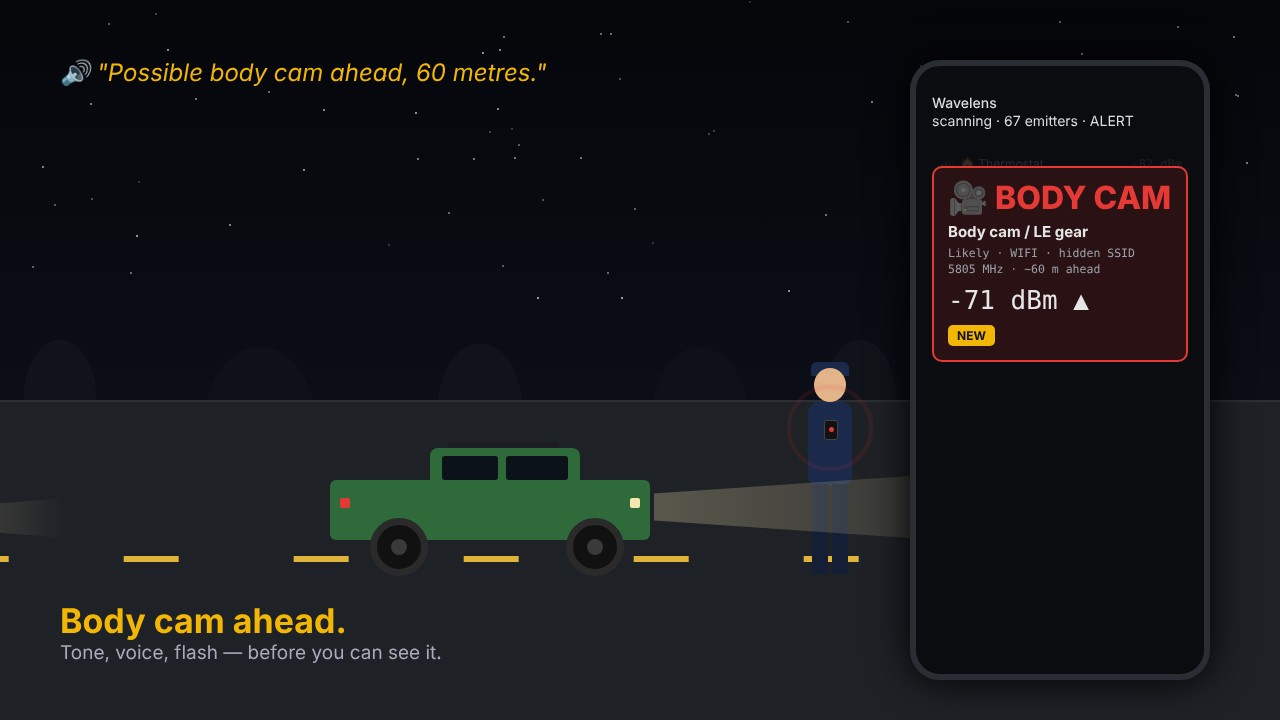
| 🎥Body cams | Worn cameras with a Wi-Fi or Bluetooth radio | Vendor prefixes and hidden-SSID hotspots; the same hardware on a bus is labelled a vehicle camera, not an officer |
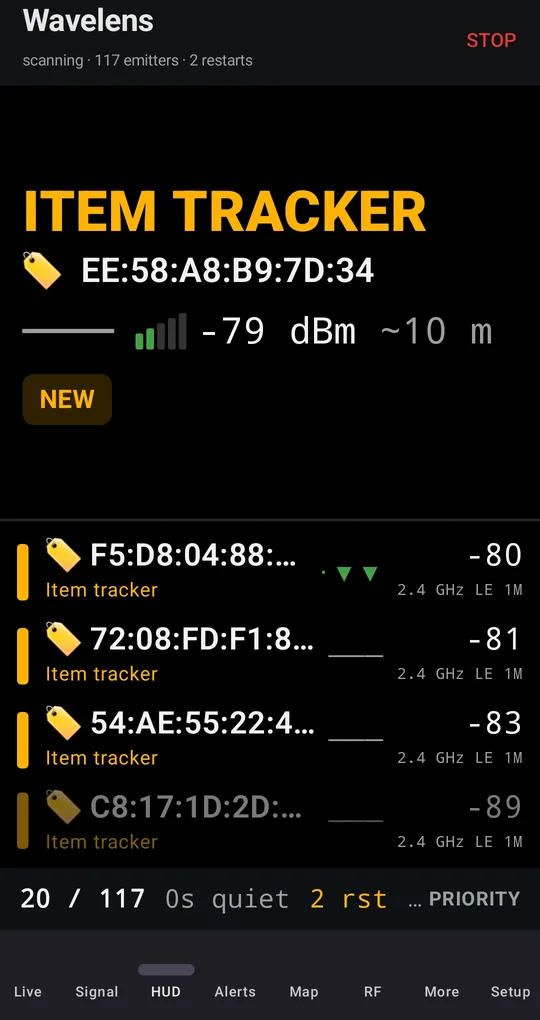
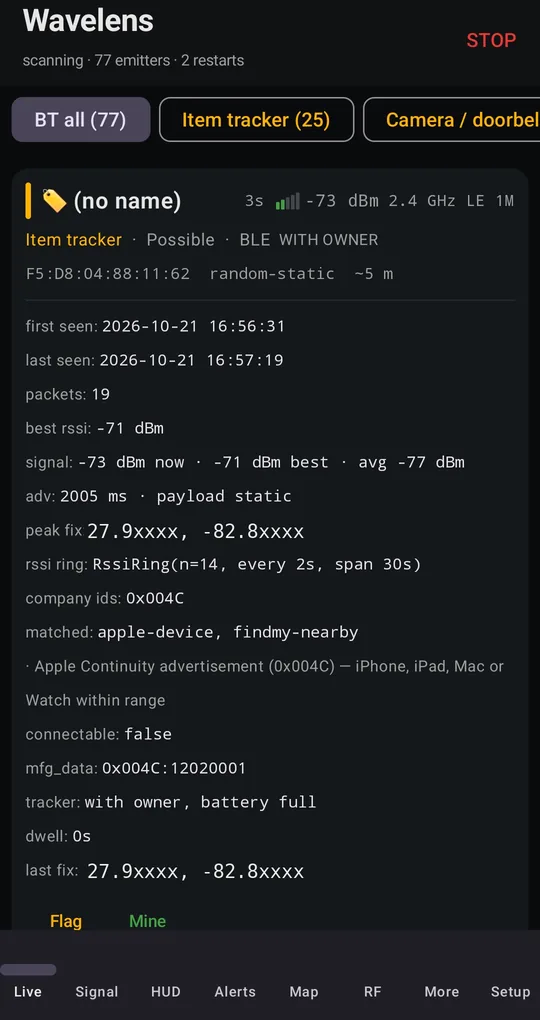
| 🏷Item trackers | AirTag, Tile, Chipolo, Pebblebee, SmartTag, Find My Device tags | Find My and FMDN frames, DULT unwanted-tracker service, vendor company IDs — and whether the tag is separated from its owner |
| 🚁Drones | Any aircraft broadcasting Remote ID | ASTM F3411 decoded in full: altitude, speed, heading, and where the operator is standing |
| 🎙Acoustic sensors | Gunshot and noise detection units | Vendor prefixes |
| 📡Traffic sensors | Bluetooth and Wi-Fi travel-time probes | Vendor prefixes and advertising patterns |
| 🛠RF tools | Pentest and signal-capture hardware | Known device names and service UUIDs |
| 📱Everything else | Phones, wearables, cars, doorbells, access points, cell sites | Classified so the list above stands out — and so a phone that follows you is noticed |
Alerts while you drive
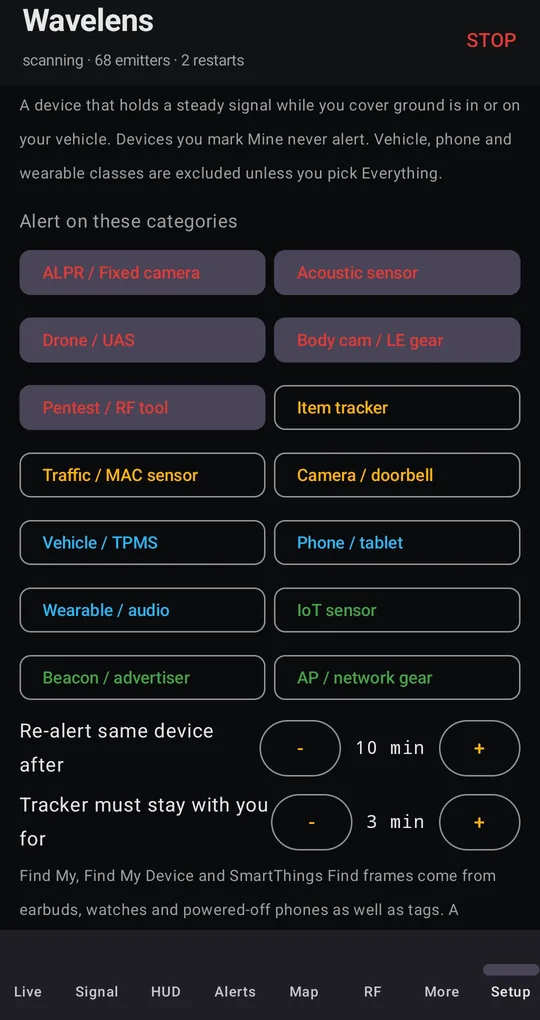
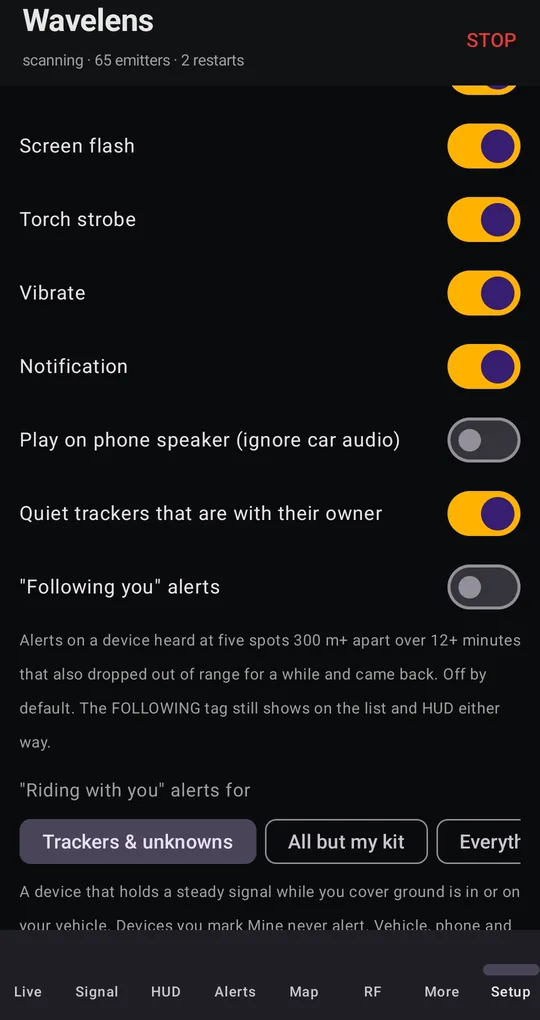
Phone on the dash, screen off. A distinct tone for each kind, the spoken name and distance, a screen flash, the torch, a buzz — each one a toggle — routed to the handset speaker if you'd rather the car's audio didn't swallow it.
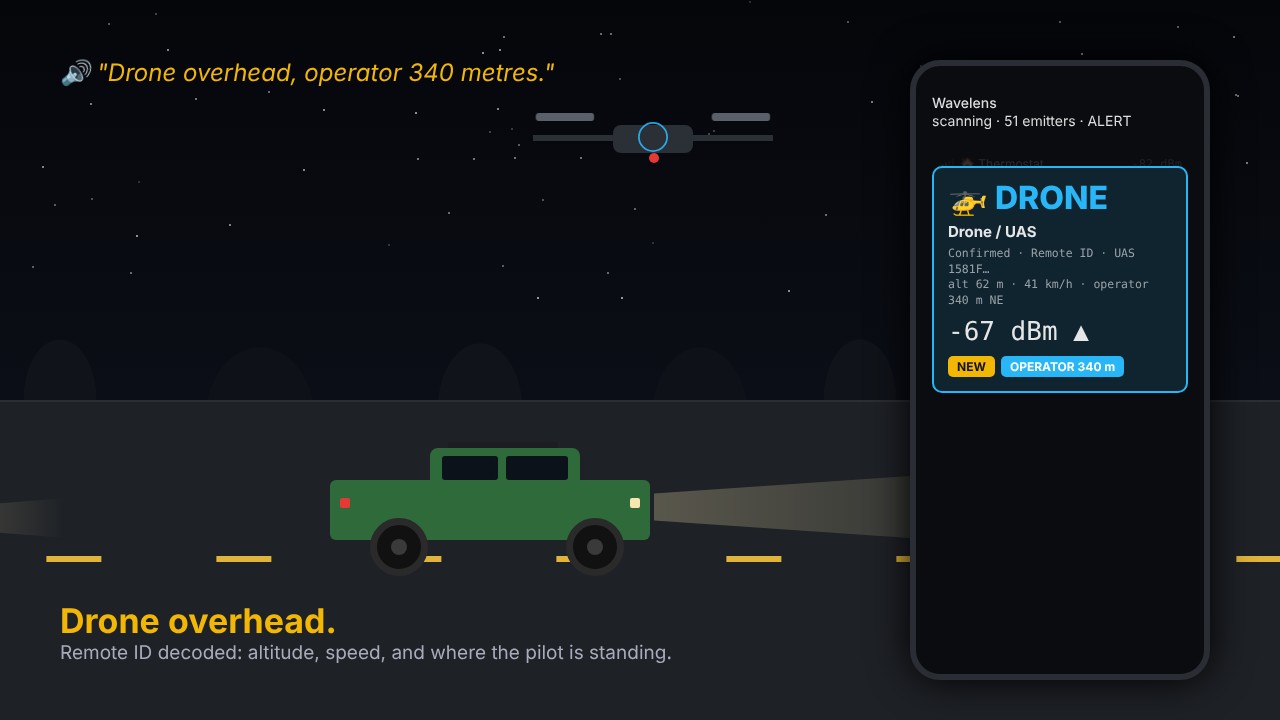
Drone overhead
Remote ID decoded: altitude, speed, and where the pilot is standing.
Body cam ahead
Tone, voice and flash before you can see it.
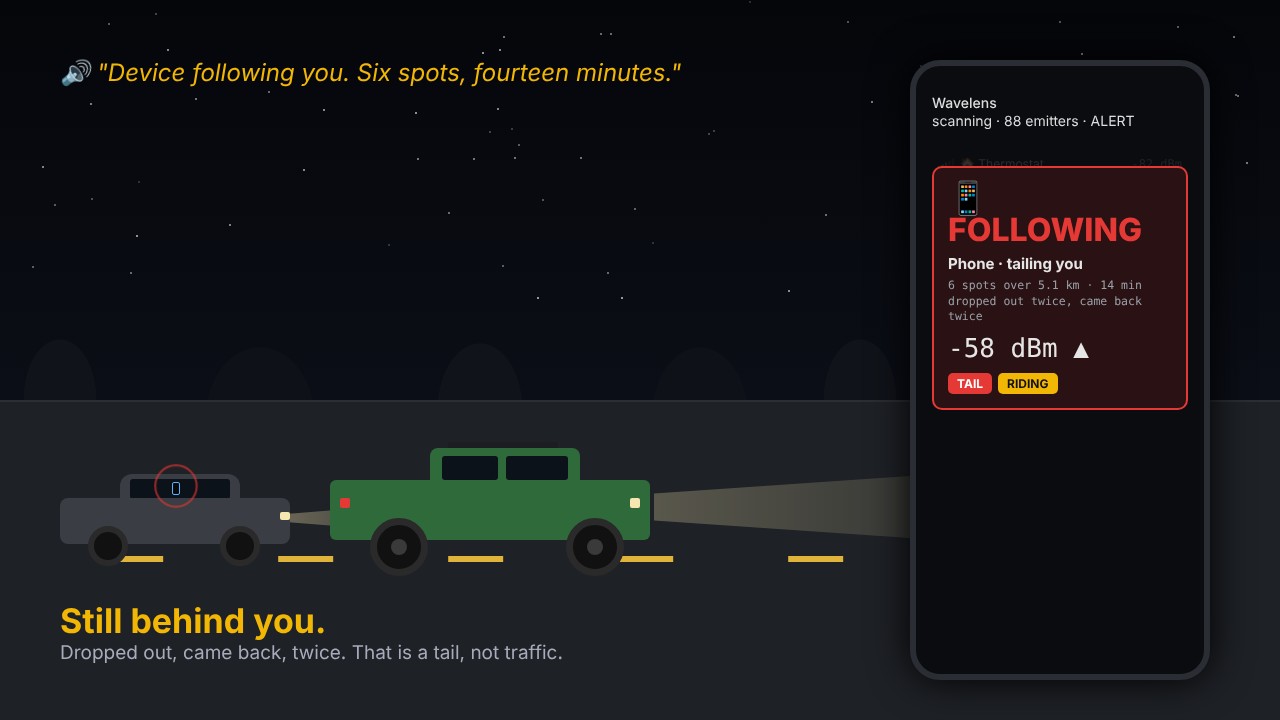
Still behind you
Dropped out, came back, twice. That's a tail, not traffic.
Built for the road, not the lab
Riding with you
A device that holds a steady signal while you cover ground is in or on your vehicle. Wavelens scores every emitter against your own GPS motion and alerts when one keeps pace through turns and stop-and-go — traffic jams and parking don't count.
Following you
Heard at five well-separated spots over twelve minutes, and lost for at least three minutes in between: the car in the next lane never leaves range, so it never qualifies. Tails come with a map replay of your path against the device's hits and gaps, and the evidence is saved to disk the moment it happens.
Trackers that matter
Find My frames come from AirPods and powered-off iPhones as well as AirTags, so a tracker alerts only when it's separated from its owner and has stayed with you — or is riding or following.
Your routes, learned
The app learns the roads you drive regularly and the fixed emitters along them. A new plate reader on your commute gets its own alert; the one you've passed thirty times goes quiet.
Flag once, recognise forever
Phones and trackers rotate their addresses every few minutes. Flag a device and Wavelens fingerprints what doesn't change, so the second time you pass the same camera it says known, not possible.
A report for every drive
Duration, distance, cameras passed, trackers heard, anything that rode or followed — exported as PDF or KML. And a plain-English card for every kind of device: what it is, who deploys it, what it can and can't see.
Screens
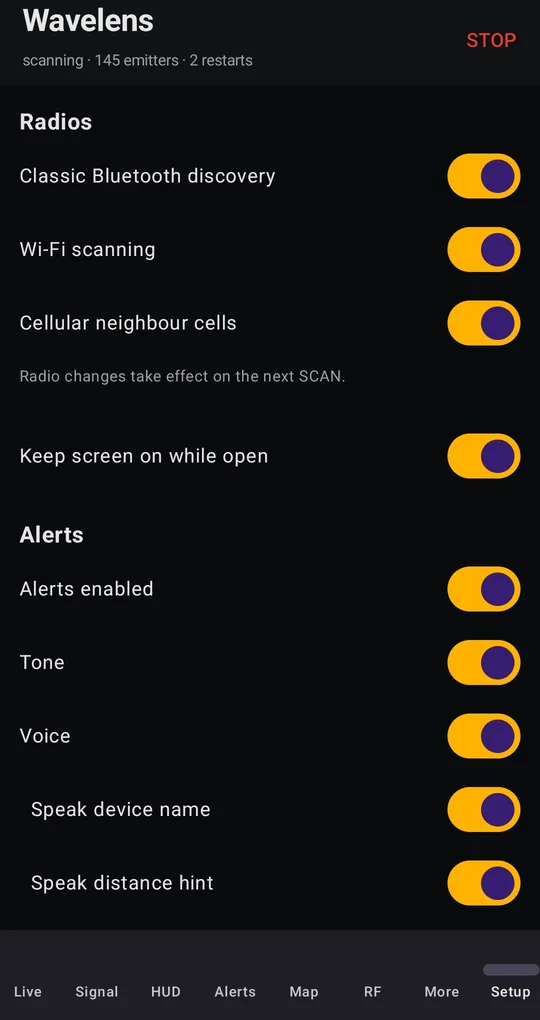
Nothing leaves your phone
- No network permission. The app cannot make a network request — not to us, not to anyone.
- No account, no analytics, no ads, no crash reporting. There is nothing to sign up for and nothing phoning home.
- Listen only. Wavelens never connects to, pairs with or transmits to the devices it hears.
- Your data stays yours. Detections, history and recordings live in the app's private storage, excluded from cloud backup, deleted when you uninstall.
- Sharing is yours to choose. The only way anything leaves is a file you export or a diagnostics report you read in full and send yourself.
- Read the full privacy policy
Get Wavelens
$4.99, once. On Google Play, or sideload the same build from GitHub if you'd rather not use a store at all.